What Is a Double Column Surface Grinder and When Should You Use One?
Jul 07, 2026
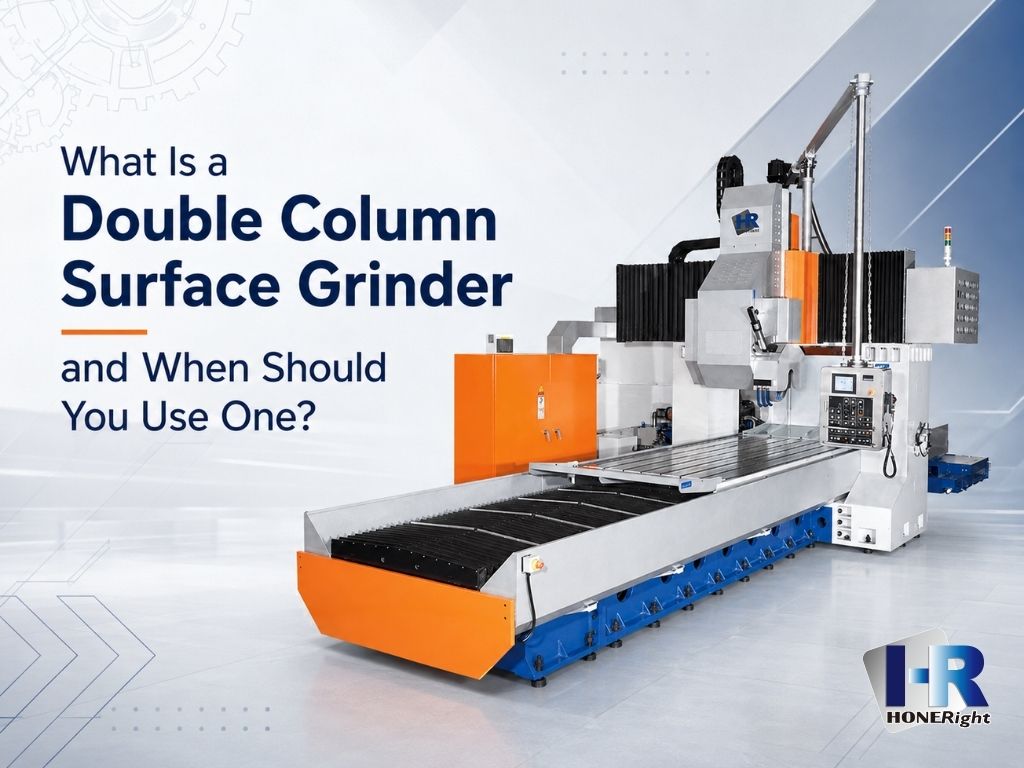
In precision metalworking, achieving a flat and smooth surface is not always a simple finishing step. For large molds, heavy plates, machine bases, structural components, and other oversized workpieces, surface grinding requires more than a standard machine. It requires a stable structure, reliable motion control, and the ability to maintain accuracy across a wide working area.
This is where a double column surface grinder becomes an important solution.
A double column surface grinder, also known as a gantry grinder or bridge grinder, is designed for large and heavy workpieces that require precise flatness and surface finish. Unlike smaller surface grinding machines, this type of machine uses two vertical columns and a crossbeam structure to support the grinding head and maintain rigidity during machining. The result is a more stable grinding process, especially when working with wide, long, or heavy metal components.
For manufacturers that need to improve grinding accuracy, reduce manual finishing work, or handle larger workpieces more efficiently, understanding when to use a double column surface grinder can help make the right equipment decision.
What Is a Double Column Surface Grinder?
A double column surface grinder is a heavy-duty grinding machine used to create flat, smooth, and accurate surfaces on metal workpieces. The machine uses a rotating abrasive wheel to remove material from the surface of the workpiece, gradually achieving the required flatness, thickness, and surface quality.
The name “double column” comes from the machine structure. Instead of relying on a single column or compact frame, the machine is built with two vertical columns connected by a crossbeam. This bridge-like structure allows the grinding head to move across the workpiece while maintaining strong support on both sides of the table.
This design is especially useful when the workpiece is large, heavy, or difficult to move between multiple machines. The workpiece can be placed on the worktable, while the machine structure provides the stability needed for consistent grinding performance.
In practical terms, a double column surface grinder is often used when standard surface grinders are no longer sufficient due to workpiece size, weight, machining area, or accuracy requirements.
How Does a Double Column Surface Grinder Work?
The basic grinding principle is similar to other surface grinding machines. A grinding wheel rotates at high speed and removes small amounts of material from the workpiece surface. However, the difference lies in the machine structure and capacity.
In a double column surface grinder, the workpiece is fixed on the machine table. The grinding wheel moves across the surface according to the required machining path. Depending on the machine design, the table, grinding head, or crossbeam may move in different directions to complete the grinding process.
Because the machine is built for large-scale grinding, rigidity is extremely important. Any vibration, deflection, or instability may affect surface quality and dimensional accuracy. The double column structure helps reduce these risks by supporting the grinding movement from both sides, making it easier to maintain stable cutting conditions throughout the process.
This is one of the main reasons double column surface grinders are commonly used for large workpieces where flatness and surface finish are critical.
Key Advantages of Double Column Surface Grinders
One of the biggest advantages of a double column surface grinder is its ability to handle large and heavy workpieces. In many industries, components such as machine beds, molds, dies, plates, and structural parts cannot be processed effectively on smaller grinding machines. A double column design provides the working space and structural strength needed for these applications.
Another important advantage is machining stability. During surface grinding, even small movement errors can affect the final surface. A rigid machine frame helps reduce vibration and supports more consistent grinding results. This is especially valuable when processing wide surfaces or long workpieces that require uniform flatness from one end to the other.
Double column surface grinders also help improve production efficiency. When large workpieces can be processed on one machine, manufacturers can reduce unnecessary handling, repositioning, and secondary finishing. This not only saves time but also helps reduce the risk of accumulated errors caused by moving the workpiece between different machines.
In addition, these machines support better surface quality. For components that require precise fitting, smooth sliding, sealing, or assembly accuracy, the final surface condition can directly affect product performance. A double column surface grinder helps manufacturers achieve the flatness and smoothness needed for demanding applications.
When Should You Use a Double Column Surface Grinder?
A double column surface grinder is not required for every grinding job. For small parts or simple surface finishing, a conventional surface grinder may be enough. However, when the workpiece becomes larger, heavier, or more demanding in accuracy, a double column surface grinder becomes a better choice.
You should consider using a double column surface grinder when the workpiece size exceeds the capacity of standard surface grinding machines. Large metal plates, mold bases, machine components, and industrial parts often require a wider table and longer grinding stroke. If the machine cannot fully support the workpiece, it becomes difficult to achieve consistent accuracy.
It is also suitable when flatness is a critical requirement. Some parts need to maintain tight tolerances across a broad surface. If the surface is uneven, the final assembly may suffer from poor contact, vibration, alignment issues, or reduced service life. In these cases, stable grinding is not just a finishing process; it is part of the quality control strategy.
Another situation is when the workpiece is heavy and difficult to reposition. Moving a large component repeatedly increases both labor time and the risk of damage. A double column surface grinder allows more work to be completed in one setup, helping manufacturers improve efficiency and maintain accuracy.
Manufacturers should also consider this type of machine when surface finish affects product performance. For example, sliding surfaces, mounting surfaces, mold surfaces, and precision machine parts often require smooth and consistent finishing. A properly selected double column surface grinder can help achieve these requirements more reliably.
Common Applications of Double Column Surface Grinding
Double column surface grinders are widely used in industries that work with large metal parts and precision components. One common application is mold and die manufacturing. Large molds require accurate surfaces to ensure proper assembly, product consistency, and long-term durability. Surface grinding helps create the flatness needed for mold bases and related components.
Another common application is machine tool manufacturing. Components such as machine beds, columns, tables, and structural parts require high stability and dimensional accuracy. If these parts are not properly ground, the performance of the final machine may be affected.
Double column surface grinding is also used for heavy equipment components, industrial plates, precision fixtures, and large mechanical parts. In these applications, the goal is not only to create a clean surface, but also to ensure reliable contact, accurate assembly, and stable long-term performance.
For manufacturers working with large-scale metalworking projects, double column surface grinders provide the capacity and rigidity needed to process these parts more efficiently.
Double Column Surface Grinder vs. Conventional Surface Grinder
The main difference between a double column surface grinder and a conventional surface grinder is machine capacity and structural stability.
A conventional surface grinder is usually suitable for smaller and medium-sized workpieces. It is often used for general surface finishing, toolroom work, and precision grinding of smaller components. These machines are useful and flexible, but they may not provide enough table size, rigidity, or load capacity for large workpieces.
A double column surface grinder, on the other hand, is designed for larger and heavier parts. The double column structure provides stronger support, which helps maintain grinding accuracy across a larger working area. This makes it more suitable for heavy-duty applications where surface flatness, stability, and machining consistency are important.
In simple terms, a conventional surface grinder is suitable when the workpiece is small and the grinding area is limited. A double column surface grinder is suitable when the workpiece is large, heavy, or requires high stability during grinding.
What to Consider When Choosing a Double Column Surface Grinder
Choosing the right double column surface grinder requires more than comparing machine size. Manufacturers should first consider the maximum workpiece dimensions and weight. The machine must be able to support the workpiece safely while providing enough travel range for complete surface grinding.
The required accuracy is another key factor. Different applications may have different flatness, thickness, and surface finish requirements. Understanding these requirements helps determine the machine structure, grinding capacity, and control features needed for production.
Machine rigidity should also be carefully evaluated. A stable frame, strong column structure, and reliable table movement all contribute to consistent grinding performance. For heavy-duty applications, rigidity is one of the most important factors affecting machining quality.
Production needs should also be considered. Some factories require machines for occasional large-part grinding, while others need continuous production capability. In these cases, machine durability, operation convenience, maintenance support, and service availability become important decision factors.
Finally, manufacturers should consider the supplier’s technical support. A double column surface grinder is a long-term investment. Professional consultation, machine selection support, installation, maintenance, and repair service can all affect the value of the equipment over time.
Hone Right Double Column Surface Grinder Solutions
Hone Right provides double column surface grinder solutions for manufacturers that require stable grinding performance for large and heavy workpieces. With HRE Series double column surface grinders and TG Series double column surface grinders, Hone Right supports precision surface grinding applications across metalworking, machine manufacturing, mold production, and other industrial fields.
For customers who need to process large workpieces with better flatness, smooth surface finish, and stable machining quality, choosing the right grinding machine is essential. Hone Right also provides professional consultation and service support to help customers select suitable equipment according to their workpiece size, application needs, and production goals.
FAQ: Double Column Surface Grinder
1. What is a double column surface grinder used for?
A double column surface grinder is used for grinding large, heavy, or precision metal workpieces that require high flatness and smooth surface finish. It is commonly applied to mold bases, machine tool components, large plates, industrial fixtures, and heavy-duty metal parts.
2. What is the difference between a double column surface grinder and a conventional surface grinder?
The main difference is machine structure and workpiece capacity. A conventional surface grinder is usually suitable for smaller parts, while a double column surface grinder uses two vertical columns and a bridge-type structure to support larger and heavier workpieces with better stability.
3. Why is machine rigidity important in surface grinding?
Machine rigidity helps reduce vibration, deflection, and movement errors during grinding. For large workpieces, a rigid machine structure is essential for maintaining stable grinding performance, precise flatness, and consistent surface quality across the entire workpiece.
4. When should manufacturers choose a double column surface grinder?
Manufacturers should consider a double column surface grinder when their workpieces are too large or heavy for standard surface grinders, when flatness requirements are strict, or when they need more stable grinding performance for long, wide, or high-value components.
5. What industries commonly use double column surface grinders?
Double column surface grinders are commonly used in mold and die manufacturing, machine tool production, heavy equipment manufacturing, precision metalworking, and industrial component machining. These industries often require accurate surface grinding for large and heavy parts.
6. How can I choose the right double column surface grinder?
To choose the right machine, manufacturers should consider workpiece size, workpiece weight, required flatness, surface finish requirements, production volume, machine rigidity, and after-sales support. Consulting with an experienced machine supplier can help ensure the selected machine matches the actual production needs.
Conclusion
A double column surface grinder is an essential machine for manufacturers that need to grind large, heavy, or high-precision workpieces. Its rigid bridge-type structure, wide working capacity, and stable grinding performance make it suitable for applications where flatness, surface finish, and machining accuracy are critical.
While conventional surface grinders may be enough for smaller parts, double column surface grinders provide the strength and stability required for demanding industrial applications. From mold bases and machine components to heavy plates and precision metal parts, this type of machine helps manufacturers improve quality, reduce handling, and achieve more consistent grinding results.
If your production involves large workpieces, strict flatness requirements, or heavy-duty surface grinding, a double column surface grinder may be the right solution for improving both machining accuracy and production efficiency.
For more information about double column surface grinder solutions, contact Hone Right to discuss your machining requirements.